
Short Answer
No, Florida does not have a blanket law requiring every garage door opener to have a battery backup. But if you live anywhere on the Treasure Coast and you lose power during a storm — which happens most hurricane seasons — a battery backup is the difference between opening your garage door normally and crawling under it with a flashlight to find the manual release cord. So the real question isn't "is it required," it's "can you afford not to have one."
Here's the rest of the explanation, so whoever loses this argument at least understands why.
How a Battery Backup Actually Works
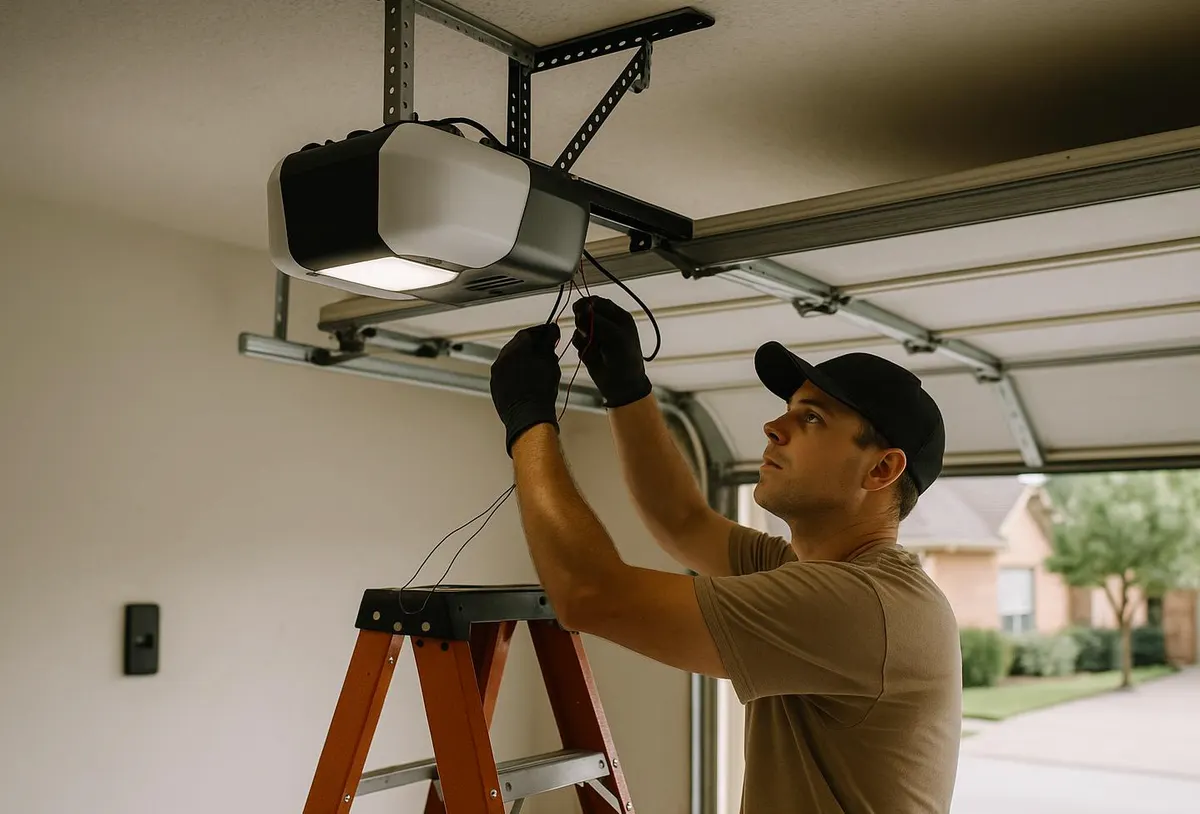
A battery backup is a separate power pack, usually mounted on or near the opener's control box, that trickle-charges off your home's electricity the same way a phone charger tops off a battery overnight. When the power goes out, the backup kicks in automatically. You don't flip a switch or do anything — the opener just keeps responding to your remote, keypad, or wall button as if nothing happened.
The catch is that it's not unlimited. Most backups are rated for a set number of open-and-close cycles, often somewhere between 10 and 20, depending on the opener model and the weight of the door. After that, the battery drains and you're back to manual operation until the power returns or the battery recharges.
Where the Safety Standard Actually Comes From
Some people confuse battery backup with the federal safety standard called UL 325, which requires openers made for the U.S. market to have entrapment protection — things like photo-eye sensors that reverse the door if something is in the way. That's a real national requirement, but it has nothing to do with battery backup. UL 325 is about not crushing a kid's bike or a pet; battery backup is about keeping the door working when the grid goes down. They're often sold together in newer openers, which is probably where the confusion started.
Why It Matters More Here Than in a Lot of Other Places
Hurricane season runs through late fall, and power outages that last a few hours to a few days aren't rare on the Treasure Coast. If your garage is the only way you get a car out — or the only way you get a car in before a storm hits — losing opener power at the wrong moment is more than an inconvenience. It can mean standing in wind and rain trying to disengage the trolley by hand while rain blows sideways through the open bay.
There's also the humidity angle. Homes here rarely have fully climate-controlled garages, and heat is hard on batteries in general. A backup battery that might last five years in a cooler, drier climate may need replacing closer to every two to three years in a hot Florida garage. If nobody ever tests it, you can end up with a backup that looks installed but is actually dead the one week you need it.
What It Costs and What You Get
As a national range, standalone battery backup units typically run somewhere around $150 to $300, and many mid-tier and premium belt-drive openers now come with one built in rather than sold separately. If you're shopping for a new opener anyway, it's worth asking whether backup power is included or bolted on as an add-on, since that changes both the price and how the components are integrated.
How to Tell If Yours Actually Works
- Unplug the opener from the wall outlet for a few seconds while the door is closed, then try opening it with your remote. If it responds, the backup is functioning.
- Check the battery compartment for corrosion or a swollen case — salt air near the coast and general Florida humidity can cause terminal corrosion faster than you'd expect, especially in garages that aren't sealed tight.
- Listen for a status light or beep on the opener unit itself; most units have an indicator showing whether the backup is charged, charging, or needs replacement.
- Know where the manual release cord is even if your backup works — it's your fallback if the backup also fails during an extended outage.
When It's Genuinely Worth Prioritizing
If any of these describe your household, a battery backup stops being optional in any practical sense:
- You or someone in the home has limited mobility and can't easily operate a manual release.
- Your garage is the primary or only vehicle access point.
- You've had multi-day outages before, or you live in an area prone to them.
- Your current opener is more than 10 years old and was never designed with backup power in mind.
When to Call Stuart Garage Door Pro
If you test your current setup and the backup doesn't respond, or you're not sure your opener even has one, that's a quick diagnosis for us. We can tell you whether your existing opener supports a battery backup add-on or whether it makes more sense to handle it as part of a full Garage Door Opener Installation with backup power built in from the start. If it's just been a while since anyone looked at the system — batteries, sensors, chain tension, the works — our Garage Door Maintenance & Tune-Up service covers that too, and it's a good thing to get done before storm season ramps up rather than during it.
If you're anywhere in Stuart, Palm City, Jensen Beach, Port St. Lucie, Hobe Sound, Indiantown, Sewalls Point, or Jupiter and you want a straight answer about your garage door's backup power, give Stuart Garage Door Pro a call. We'll settle it faster than another round of the argument will.