
Rule of thumb: if your garage door is slow to open on a chilly morning here, the temperature itself is rarely the real problem—moisture is. Stuart doesn't see hard freezes often, so a door that feels stuck usually points to condensation, rust, or thickened grease rather than actual ice. The exceptions are the handful of mornings each winter when temperatures drop into the 30s, especially inland toward Indiantown or Palm City, where dew on the slab can turn into a thin skin of frost overnight and genuinely bond the weatherstrip to the concrete.
What a Sluggish or Stuck Door Looks Like
Before chasing causes, it helps to know what you're actually seeing. Common symptoms include:
- The door hesitates or groans for the first few inches, then moves normally
- The opener motor strains, clicks, or runs longer than usual before the door moves
- The bottom seal looks flattened or torn where it meets the slab
- The door shudders or looks slightly crooked as it lifts off the ground
- The opener reverses the door immediately, as if something is blocking it
Any one of these can show up after a cool, damp night. The trick is figuring out which part of the system is actually dragging.
Working Through the Causes, in the Order a Technician Checks Them
1. The Weatherstrip Is Bonded to the Slab
This is the first thing worth ruling out because it's the simplest. On a humid night followed by a cold snap, moisture under the rubber seal can freeze or just get sticky enough to grip the concrete. The door looks and sounds stuck, but it's really the seal, not the mechanism. The fix is straightforward: don't force the opener. Gently pry the bottom edge free by hand, then check the weatherstrip for tears or flattening. If it's cracked or brittle from age and UV exposure, it should be replaced — a flattened seal won't bond as easily next time, but it also won't keep water and bugs out, so this is a maintenance item worth addressing either way.
2. Track Buildup, Rust, and Thickened Lubricant
Next, a technician looks at the tracks and rollers. Cooler, humid air causes standard grease to thicken slightly, which adds resistance right as the door starts moving. Near the coast, salt air accelerates surface rust on tracks and roller shafts, which creates friction even when lubrication is otherwise fine. The fix involves wiping down the tracks to remove grit and old lubricant, checking for pitting or rust on the rails, and applying a silicone-based garage door lubricant rather than household oil, which attracts dust and gums up over time. If rollers are worn or rusted through, they get swapped rather than lubricated, since lubrication won't fix metal that's already pitted.
3. Spring Tension Shifting with Temperature
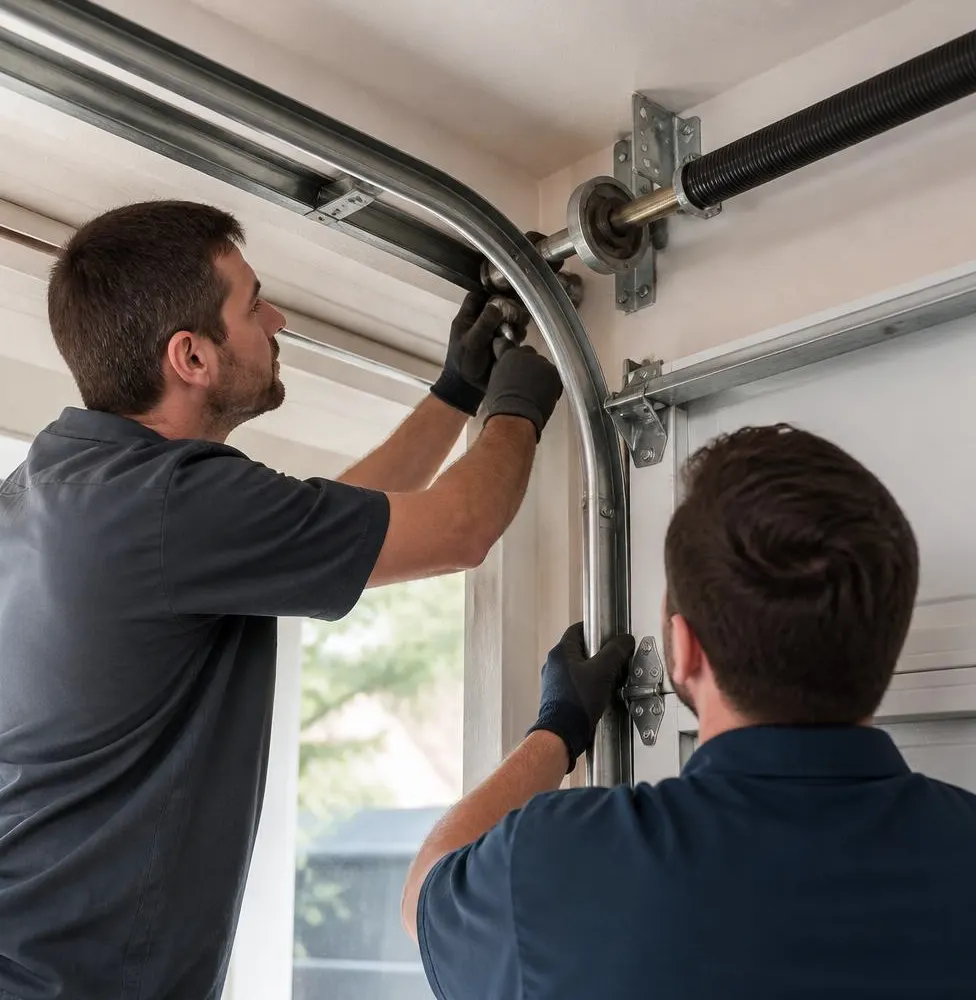
Torsion springs are metal, and metal contracts slightly in cooler temperatures, which can shift tension just enough to make the door feel heavier on a cold morning. A technician checks this by disengaging the opener and lifting the door by hand — a properly balanced door should rise smoothly and stay roughly where it's left at waist height. If it feels heavy, drops on its own, or the opener strains to compensate, the spring tension needs adjustment. This is also the point where the technician inspects the spring itself for rust spots or gaps in the coils, since coastal moisture speeds up corrosion here more than it would farther inland. Spring work involves real stored tension and is not a DIY adjustment — it's one of the more dangerous repairs in the house.
4. Opener Sensitivity and Limit Settings
If the door moves fine by hand but struggles with the opener attached, the issue often sits in the opener's force and limit settings. Cold, stiff mechanical parts require slightly more force to get moving, and if the opener's sensitivity is set too low, it reads that resistance as an obstruction and reverses the door. The fix is recalibrating the force and limit settings per the opener's manual, and in older units, checking the drive gear or belt for wear that's making the whole system work harder than it should.
5. Cables Weakened by Salt Air and Moisture
Last on the list, because it's less common but more serious: frayed or rusted cables. Salt air and repeated humidity swings slowly corrode cable strands, and a weakened cable can cause the door to hang unevenly or jerk as it moves, which can look like a cold-weather stiffness problem at first glance. A technician checks the cables along their full length, particularly near the bottom brackets, and replaces them if there's any fraying or visible rust bloom. Like springs, cables are under tension and carry real risk if they let go mid-repair, so this isn't a job to handle solo.
When to Call Stuart Garage Door Pro
A stuck weatherstrip or a quick lubrication job is something many homeowners can handle themselves. But if the door feels heavy when lifted by hand, the opener is straining and reversing, or you spot rust on the cables or spring coils, it's time to call in a technician rather than keep testing the opener's limits. Stuart Garage Door Pro handles both Garage Door Spring Repair and Garage Door Cable Repair for homes across the Treasure Coast, along with full Garage Door Maintenance & Tune-Up visits that catch rust, worn rollers, and thickened lubricant before they turn into a stuck door on a cold morning. We'll check balance, tension, tracks, and cables in one visit and tell you plainly what needs attention now versus what can wait.
If your garage door has been sluggish, noisy, or sticking lately, give Stuart Garage Door Pro a call. We serve Stuart, Palm City, Jensen Beach, Port St. Lucie, Hobe Sound, Indiantown, Sewalls Point, and Jupiter, and we can usually get a technician out fast.