
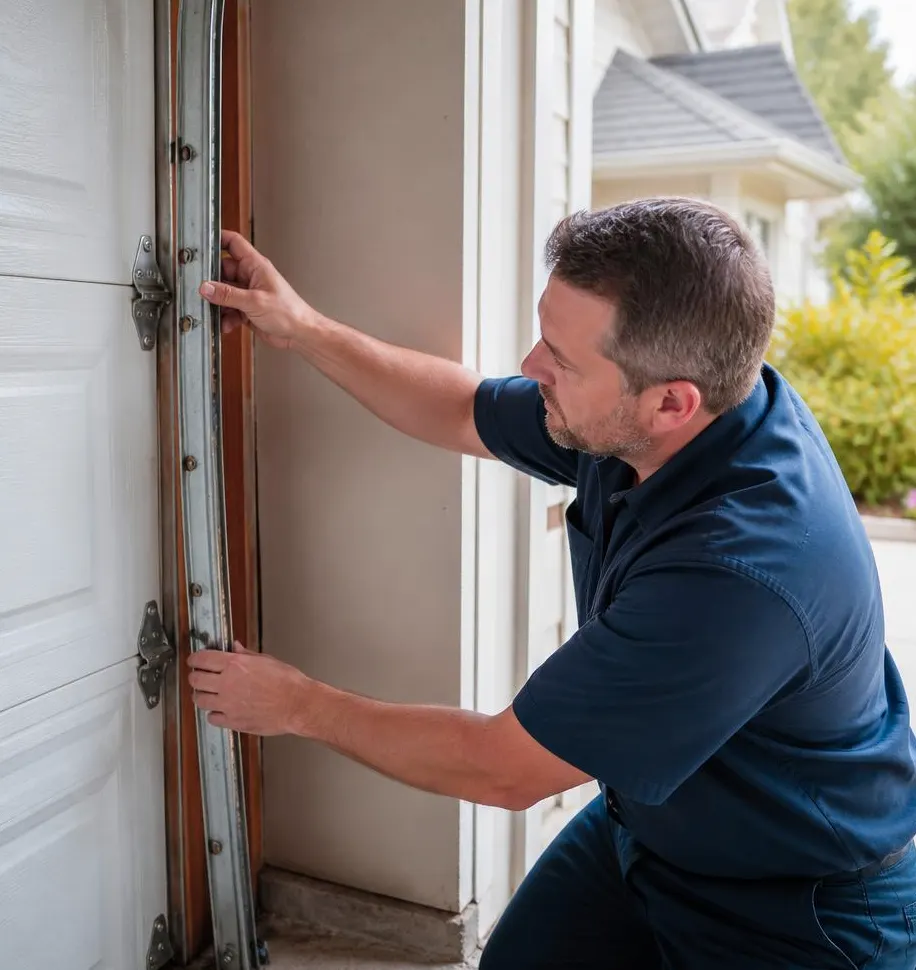
If your garage door made it through hurricane season without a major problem, give it one thorough inspection before the dry season settles in and call it done. The exceptions are homes that sat empty for part of the summer, doors on coastal lots exposed to salt air, and anything that was already squeaking or sagging before storm season started — those need more than a glance.
Start with a Slow Walk-Around
Open and close the door manually, then run it on the opener while you watch and listen. You're checking for three things: smooth, even movement on both sides; no grinding or popping sounds from the springs or rollers; and a door that stays level instead of tilting as it travels. Months of heavy humidity and afternoon downpours can swell wood-composite panels or loosen hardware just enough to throw a door slightly out of alignment, and that's easiest to catch now before cooler, drier air makes the wood contract again and masks the issue.
Check What the Humid Months Left Behind
South Florida's wet season is hard on metal and hardware, even when nothing looks obviously wrong. Look for:
- Surface rust on the track, hinges, and spring coils, especially on doors closer to the water where salt air speeds up corrosion
- Swollen or soft spots on wood or composite panels near the bottom, where splash-back from storms sits against the door
- Loose bolts and brackets where repeated humidity swelling and drying has worked fasteners slightly out of place
- Pitting or chalky residue on metal hardware, an early sign of salt corrosion that's easier to treat now than after it spreads
None of these are emergencies on their own, but catching them before the dry season gives you months of stable weather to fix them properly instead of rushing a repair.
If the House Sat Empty Part of the Summer
Plenty of homes along the Treasure Coast are used seasonally, and a garage door that hasn't opened in weeks behaves differently than one used daily. Springs can lose a bit of tension sitting under load without cycling, lubricant dries out on rollers and hinges, and pests occasionally find their way into opener housings or along the bottom seal during quiet stretches. Before putting the door back into regular use:
- Test the auto-reverse safety feature by placing a block of wood in the door's path and confirming it reverses on contact
- Check the photo-eye sensors near the floor for dust, cobwebs, or misalignment — common after months of disuse
- Listen for a labored motor sound on the first few openings, which can signal a spring that needs rebalancing
If anything feels off on those first few cycles, it's worth having it looked at before you're relying on the door daily again.
Refresh Weatherstripping Before the Air Turns Drier
The rubber seal along the bottom of the door and the weatherstripping around the frame take a beating from months of heat and moisture — they can crack, flatten, or pull away from the track. As the air gets drier in the coming months, gaps that were hidden by swollen wood or humidity-softened rubber tend to show up more clearly, letting in dust, insects, and the odd afternoon shower that still rolls through. Replacing worn seals now is a low-cost fix that keeps the garage drier and better insulated through the cooler stretch ahead.
One Last Storm-Readiness Check
Hurricane season officially winds down at the end of November, but late-season systems and strong afternoon storms aren't off the table yet. Before you fully shift into dry-season mode, confirm that:
- Any reinforcement braces or wind-load hardware installed earlier in the season are still properly tightened
- The track is firmly anchored and hasn't shifted from wind pressure during recent storms
- Manual disconnect and backup power options still work, in case you need to operate the door without power one more time this season
Lubricate and Tighten Hardware
A simple maintenance pass goes a long way heading into the next few months. Apply garage-door-specific lubricant to rollers, hinges, and the spring coil, then wipe away excess so it doesn't attract dust. While you're at it, go over the track brackets and bottom hinges with a wrench — humidity-driven expansion and contraction loosens fasteners gradually, and tightening them now prevents the rattling and misalignment that tends to show up a few months down the line.
When to Call Stuart Garage Door Pro
If you're seeing rust that's spread past the surface, a door that's noticeably off-track, or hardware you're not comfortable tightening yourself, that's where we come in. We handle Garage Door Maintenance & Tune-Ups for exactly this kind of seasonal check — rebalancing springs, replacing worn rollers and seals, and catching corrosion before it becomes a bigger repair. If the door has been struggling since before storm season, our Garage Door Spring Repair service can get tension back to where it should be so the opener isn't straining with every cycle.
Call Stuart Garage Door Pro today to schedule a seasonal tune-up for your garage door in Stuart, FL or anywhere along the Treasure Coast — we'll make sure it's ready for whatever the next few months bring.