
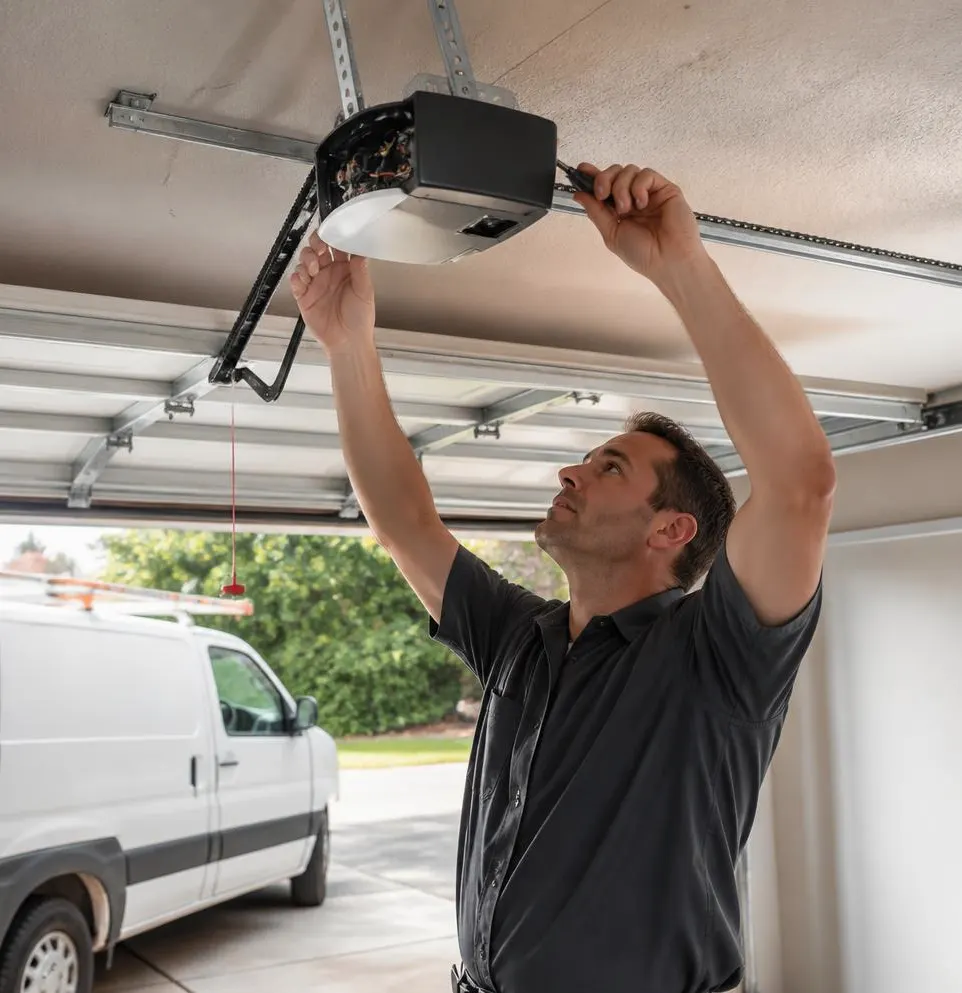
Start With the Rule of Thumb
If a garage door opens and closes in one smooth motion without jerking, shuddering, or needing a shove halfway up, the core system is probably in decent shape. The exceptions matter more than the rule: a door can glide perfectly today and still fail to meet wind-load requirements for a coastal storm, an opener can run whisper-quiet while missing a working safety reversal, and panels can look clean on the outside while rust and moisture have already weakened the seams on the inside. General home inspectors often check that the door "works" and move on. Buyers need to look closer, especially in a market where salt air, humidity, and hurricane-season wind are part of daily wear and tear.
Walk the Garage and Check These
- Springs — Look at the coils for rust, gaps, or visible stretching, and note whether it's a single spring or a two-spring system. A worn spring doesn't fail gradually; it snaps, and a door with a broken spring can come down hard and fast. This is one of the most dangerous items to leave unchecked.
- Wind-load bracing and labeling — Many garage doors sold for Florida carry a wind-load rating, sometimes marked on a sticker on the inside of the door or on the horizontal struts across the back. If there's no visible reinforcement and no rating information at all, assume the door was never upgraded for storm conditions and budget accordingly.
- Cables and pulleys — Check for fraying strands, rust buildup, or a cable sitting loosely off its drum. A failing cable means the door can drop unevenly on one side, which stresses the tracks and rollers on the other.
- Tracks, especially near the bottom — Rust tends to collect where water pools after afternoon downpours, so look closely at the lowest few feet of track on both sides. Dents or bends here cause binding, grinding, and eventually a door that jumps the track entirely.
- Rollers — Cracked plastic rollers or rusted steel ones are easy to miss but are usually the reason for loud grinding noises. They're a relatively cheap fix now, but ignored rollers can damage the tracks they ride in.
- Bottom seal and weatherstripping — Press on the rubber seal along the bottom of the door. If it's cracked, flattened, or pulling away, water and pests get a clear path in during heavy rain, and that's a near-certainty at some point during the season.
- Opener safety reversal — Close the door and set a cardboard box in its path. A working opener should stop and reverse the moment it touches the box. If it doesn't, the photo-eye sensors or the reversal mechanism need attention before anyone, especially a kid or pet, is near that door.
- Battery backup on the opener — With storm season bringing regular power outages, a battery backup unit isn't a luxury here. Ask whether the opener has one, and if it does, test that it actually holds a charge rather than just being plugged in.
- Panel condition — Run a hand along the seams of steel panels, especially lower ones, feeling for bubbling, soft spots, or flaking paint. Humidity and salt air cause rust from the inside out on older doors, and by the time it's visible on the surface, the panel is usually already compromised.
Why This Matters More on the Treasure Coast
A garage door here is doing more work than it would in a drier, calmer climate. It's absorbing moisture swings every day, taking on salt air if the home is anywhere near the coast, and it needs to hold up against wind pressure during storms rather than just open and shut quietly. A door that would pass inspection without comment inland can be a liability here if the hardware wasn't built or maintained with those conditions in mind. This is exactly the kind of detail that gets missed when an inspector is moving through a long checklist on a tight schedule.
When to Call Stuart Garage Door Pro
If the walkthrough turns up rusted springs, a door that drags on its tracks, or no sign of wind-load reinforcement, it's worth getting a second look before closing rather than after. Stuart Garage Door Pro can run a full Garage Door Maintenance & Tune-Up to catch what a general inspection won't, and if something's already failing, our Garage Door Spring Repair and Off Track Door Repair crews handle those fixes on the spot, often the same day.
If you're buying or already settled in Stuart, Palm City, Jensen Beach, Port St. Lucie, Hobe Sound, Indiantown, Sewalls Point, or Jupiter, give us a call before the door becomes a bigger problem than it needs to be.